I was given this image by Wendy Freebourne, a talented knitware designer from Bath.
The colours are so warm and rich that I couldn't resist using them for this months colour palette.
So what dye extracts would you use for this palette?
I'd give the following extracts a try, from the top:
Black - indigo and an iron modifier.
Khaki green - kamala and a light dip in indigo.
Rust - sappenwood.
Beige - cutch.
Buff - himalayan rhubarb with a copper modifier.
Friday, 4 March 2011
Tuesday, 15 February 2011
Another Technique to Try!
Ikat and faux Ikat (painted warps) are two techniques that can be used with natural dye extracts and I found an outline of the instructions on HandEye Magazine courtesy of Aviva Leigh, a dyer and weaver from Norfolk. Take a look and have a go yourself.
Tuesday, 1 February 2011
Colour Palette of the Month - February!
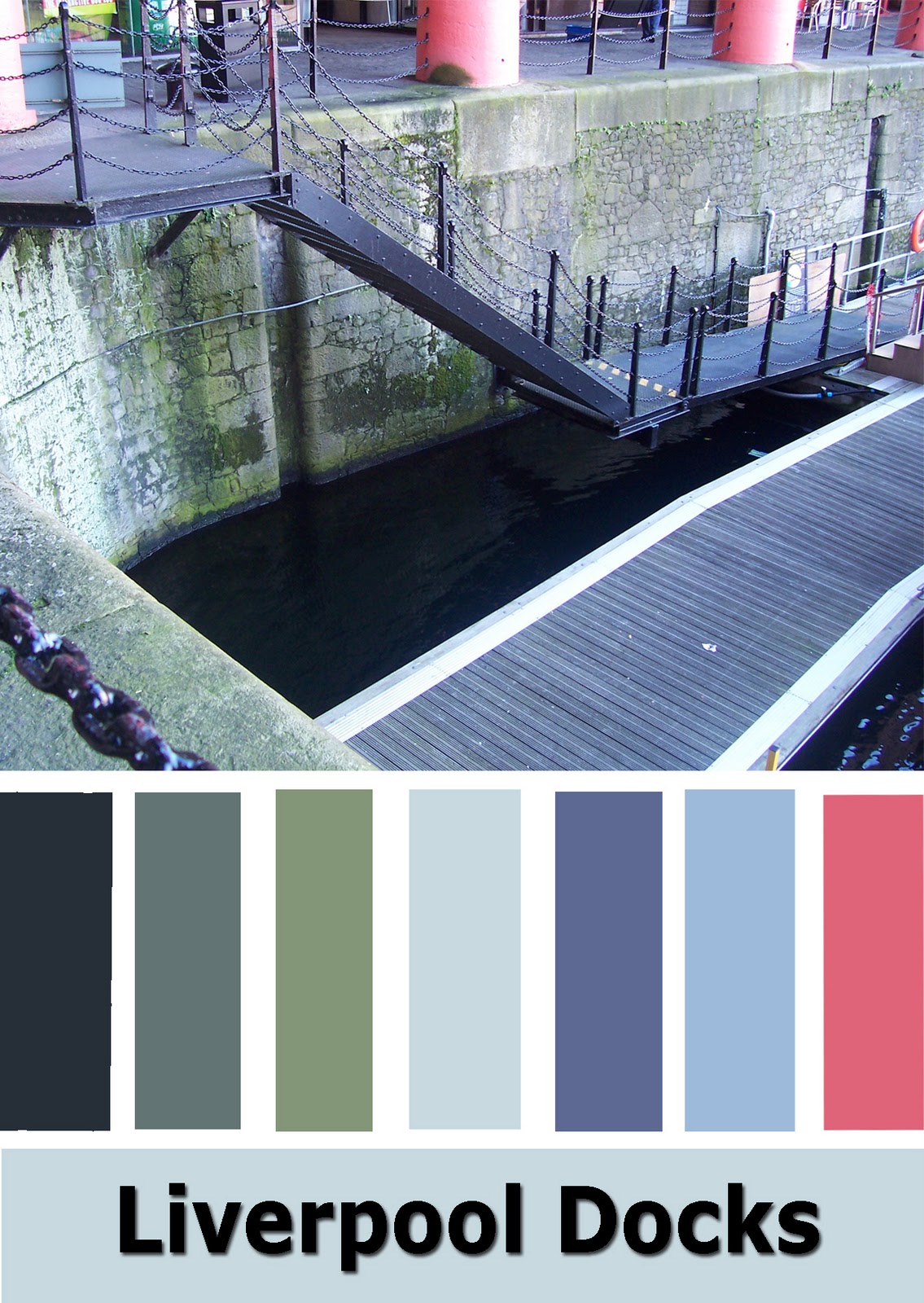
In November I was in Liverpool for a birthday treat. Obviously a trip to the docks is a must and while there I took this photograph.
Initially it was the shapes that attracted me, but once uploaded to Photoshop the colours caught my eye and following my interest in urban colour I decided to use it for my February colour palette.
How would I recreate the colours in natural dye extracts?
From Left to Right:
Several dips of indigo; a pale yellow, maybe oak gall or 2% kamala with a couple of dips indigo; oak gall or 2% kamala with one light dip of indigo; a very light dip in indigo; two or three dip in indigo; one short dip in indigo and finally a 2% red lac or a mix of red lac and lodhra bark.
How would you recreate the colours?
I hope you enjoy it.
Initially it was the shapes that attracted me, but once uploaded to Photoshop the colours caught my eye and following my interest in urban colour I decided to use it for my February colour palette.
How would I recreate the colours in natural dye extracts?
From Left to Right:
Several dips of indigo; a pale yellow, maybe oak gall or 2% kamala with a couple of dips indigo; oak gall or 2% kamala with one light dip of indigo; a very light dip in indigo; two or three dip in indigo; one short dip in indigo and finally a 2% red lac or a mix of red lac and lodhra bark.
How would you recreate the colours?
I hope you enjoy it.
Labels:
colour palettes,
indigo,
Kamala,
lodhra bark,
oak gall,
Red Lac
Wednesday, 12 January 2011
Printing with Natural Dyes
I want to bring you a post from an interesting textile blog I found. It's aimed at textile students throughout the world and there is a lot of industry information on it, but came across an interesting post about printing with natural dyes. It's not very detailed, but it will give you enough information for you to work out how to do it! My Textile Notes is the name of the blog and has lots of interesting information.
Any of the Pure Tinctoria natural mordants are full of tannins, oak gall (on the left) and cutch are the usual ones to use and myrobalan for the mordant printing are all available on the Pure Tinctoria website.
Thickeners such as Agar Agar and Gum Tragacanth are natural and easily obtained on the high street.
Let use know if you have had a go at natural printing or if you are planning to! We'd love to see your results.
Any of the Pure Tinctoria natural mordants are full of tannins, oak gall (on the left) and cutch are the usual ones to use and myrobalan for the mordant printing are all available on the Pure Tinctoria website.
Thickeners such as Agar Agar and Gum Tragacanth are natural and easily obtained on the high street.
Let use know if you have had a go at natural printing or if you are planning to! We'd love to see your results.
Labels:
cutch,
Myrobalan,
oak gall,
printing with natural dyes,
tannin
Tuesday, 4 January 2011
Ways to use Your Dye Extracts
I'm always looking for interesting ways to use my dye extracts and have been painting with the dyes on wool and wool/mix fibres, yarn and silk hankies for quite a while. I want to bring you lots of different techniques over the next year and to start I've got a blog post from Dionne Swift, a textile artist from Huddersfield, who draws, paints, dyes, prints, stitches and embellishes.
Her latest blog post shows her in her studio drawing with Procion dyes on fabric. I'm not a lover of Procion dyes, there is a lot of dye residue that washes out of the fabrics which goes down the sink, but we can use natural dye extracts in the same way by thickening the dyes in solution. If you don't want to use Manutex, as Dionne does, gum tragacanth can be used and is available at cake decorating supplies.
Helen Melvins book, Colours of the Rainbow, shows you how to use natural dye extracts with a thickener on fabric. All Helens books are very useful and well worth having on your shelf. Her knowledge of natural dyes and indigo in particular are unsurpassed.
Her latest blog post shows her in her studio drawing with Procion dyes on fabric. I'm not a lover of Procion dyes, there is a lot of dye residue that washes out of the fabrics which goes down the sink, but we can use natural dye extracts in the same way by thickening the dyes in solution. If you don't want to use Manutex, as Dionne does, gum tragacanth can be used and is available at cake decorating supplies.
Helen Melvins book, Colours of the Rainbow, shows you how to use natural dye extracts with a thickener on fabric. All Helens books are very useful and well worth having on your shelf. Her knowledge of natural dyes and indigo in particular are unsurpassed.
Saturday, 1 January 2011
Colour Palette of the Month - January!
This beautiful bouquet was given to me last year by a friend I'd helped through a difficult period in her life. I found it so inspiring that I used it for January's colour palette.
Good greens are difficult to obtain in natural dyeing, but I think the left one of the two greens, here, would be produced by using dhak and indigo and the second one might be obtained by modifying with iron water. The yellow is certainly like dhak and the centre cream colour might be the natural fleece colour or oak gall.
What do you think?
Good greens are difficult to obtain in natural dyeing, but I think the left one of the two greens, here, would be produced by using dhak and indigo and the second one might be obtained by modifying with iron water. The yellow is certainly like dhak and the centre cream colour might be the natural fleece colour or oak gall.
What do you think?
Labels:
colour palettes,
Dhak,
indigo,
iron water,
oak gall
Tuesday, 14 December 2010
Interesting article about Indigo
Benin Blues - Article
Subscribe to:
Posts (Atom)